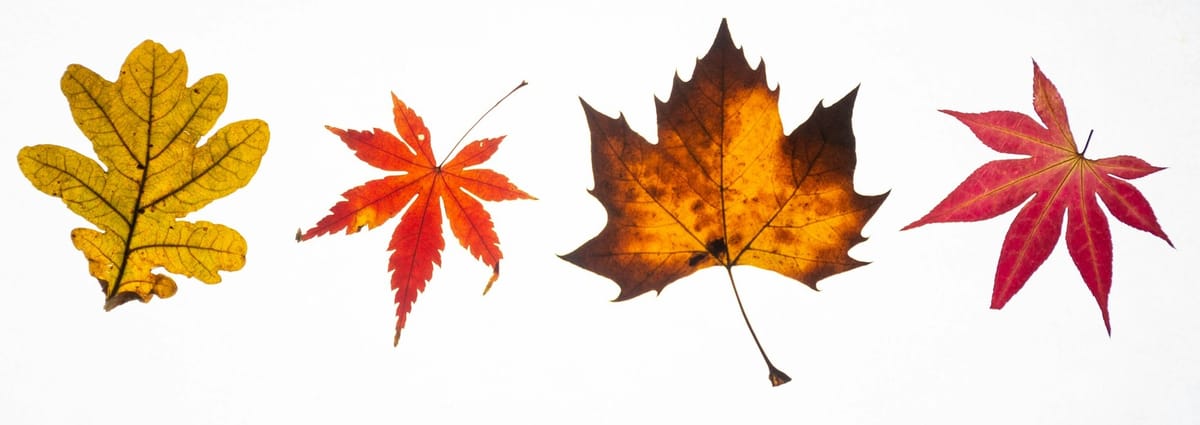
This article was originally published by Edutopia and titled "A Simple Activity to Boost Students’ Observational Skills."
 Selim Tlili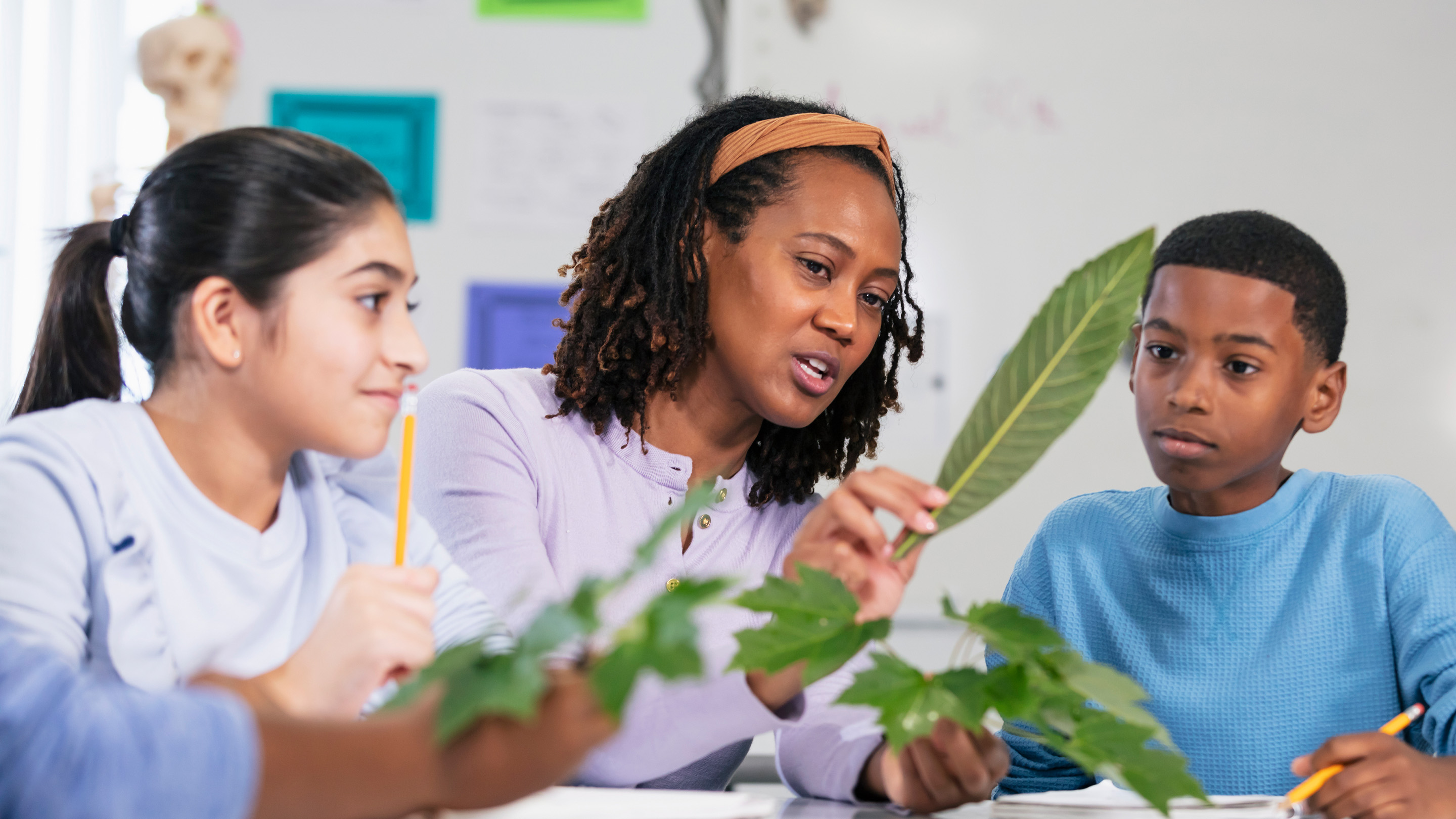
Below is the original article, unedited. It's long but I think there are ideas here worth exploring for teachers and parents who want their kids to engage in more meaningful science.
Your Science class should develop its own “natural history collection”
Humans seem to have a natural inclination towards categorizing and classifying things. Every culture and every group has some way of attempting to impose human order on the natural world. Whether it is the Linnean classification system or creation stories, humans have an innate desire to try and impose order on the world we observe around us. The scientific revolution really began as we started to classify and order life around us.
During the early era of the scientific revolution there was a sense of wonder of the natural world. For the first time people were able to explore great distances and bring back plants and animals that didn’t exist in their native habitat. Some of these new specimens, like the tomato plant brought from the Andes region of South America, completely changed the food and culture of Italy back in the 16th century when it arrived.
During the scientific revolution the act of studying the world around us was not limited to museums and universities. Many self respecting families would have its own small but respectable collection of plant and animal curiosities.
Classrooms should attempt to take advantage of this natural tendency and build a natural history collection. This activity engages children in the lost but increasingly important activity of citizen science. It also allows students to help to build a collection that will serve future classes as the collection grows.
Nature offers an incredible bounty of discarded treasures. Birds discard feathers, trees drop leaves and acorns, spiders leave behind intricate and beautiful webs. These treasures are usually overlooked and swept away.
Teachers can teach students to appreciate these beautiful things and collect them.
Start with leaves
Leaves are ubiquitous but fascinating. Every leaf is a sugar producing factory that has to figure out how to maximize access to sunlight while at the same time minimizing loss of water due to evaporation. Since every ecosystem is different and has different amounts of sunlight and water, every ecosystem has to resolve those trade offs differently. The varied shapes of leaves are that species' answer to how to balance that particular set of tradeoffs.
Large leaves, like the maple leaf, can produce a tremendous amount of sugar via photosynthesis. This is why we can produce maple sugar - the Maple tree produces a tremendous amount of sugar for long term storage in its roots and trunk. But if the leaves are torn or damaged then sugar production is dramatically reduced. Small leaves, like the leaves of an evergreen pine tree, cannot produce a lot of sugar, but their individual loss does not dramatically reduce the total amount of sugar the plant is able to produce.
Classes can collect leaves at various times of the year. Collecting them in the fall and spring will offer a different experience as the amount of sunlight available changes the leaves. Students can collect these leaves and write their own reflections on the leaves.
Plant and Leaf sketching
I discuss the value of sketching for students in various articles. Sketching is an incredibly important tool to help students pay close attention to objects. Asking students to sketch the leaves in front of them and capturing their observations is valuable. Have students sketch both sides of the leaf. Students should look at their leaves and ask themselves “how does the form of this leaf help the tree to survive?”
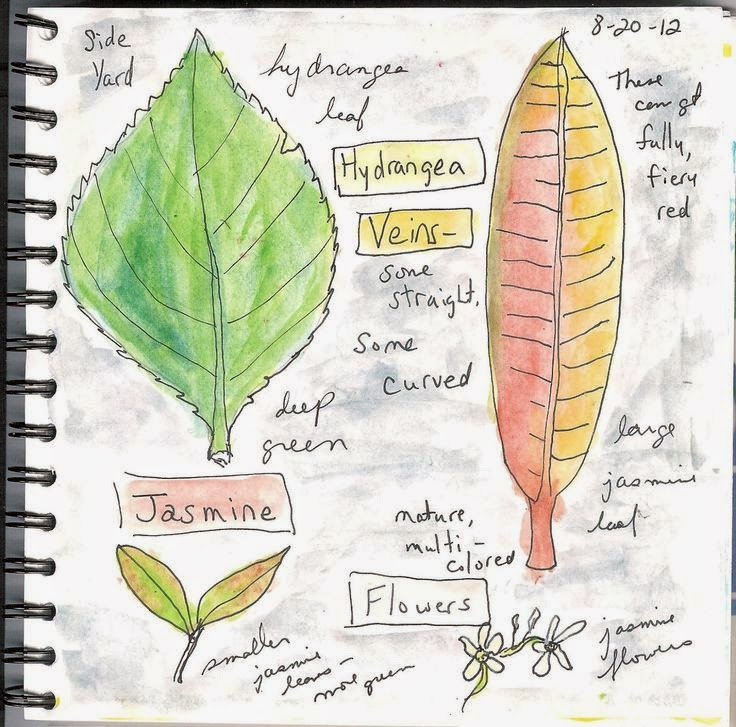
Students should sketch the plant in its entirety before taking samples. The artifact is valuable to study but we should always stress that we can only understand the part by understanding the whole. If time is limited then photos of the plant also provide value, although both are ideal. Students should be able to at the very least trace the leaf on paper.
Depending on the student's age they can answer these questions with different levels of precision and sophistication.
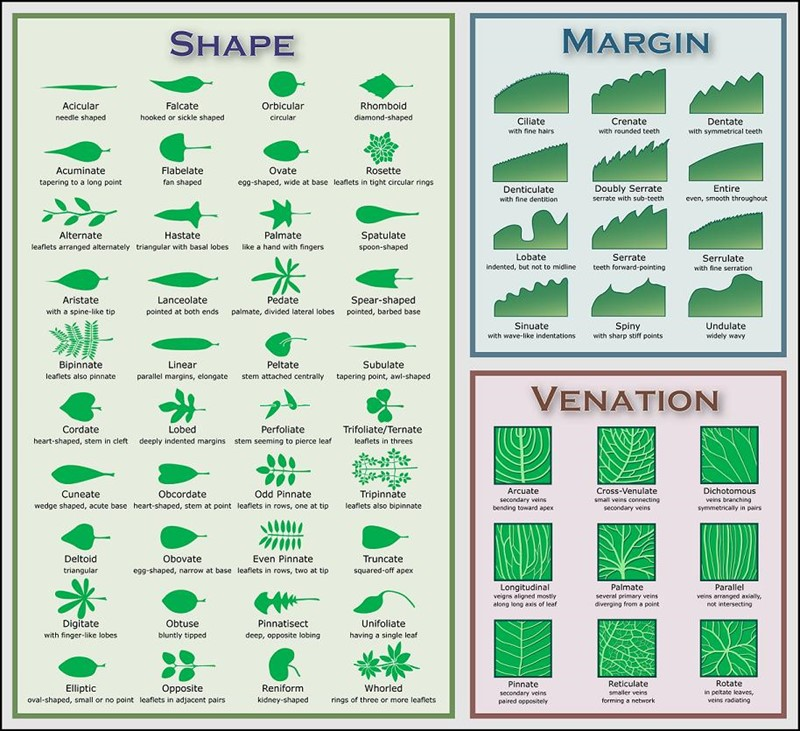
Providing students with a leaf identification chart offers a valuable tool for students to start to recognize patterns in leaves and plants. Find a leaf identification chart that is appropriate for your area. Have students get comfortable with using the vocabulary to categorize the leaves.
Leaf Rubbings
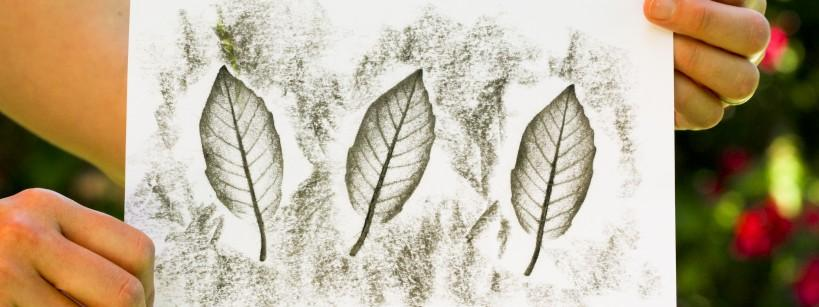
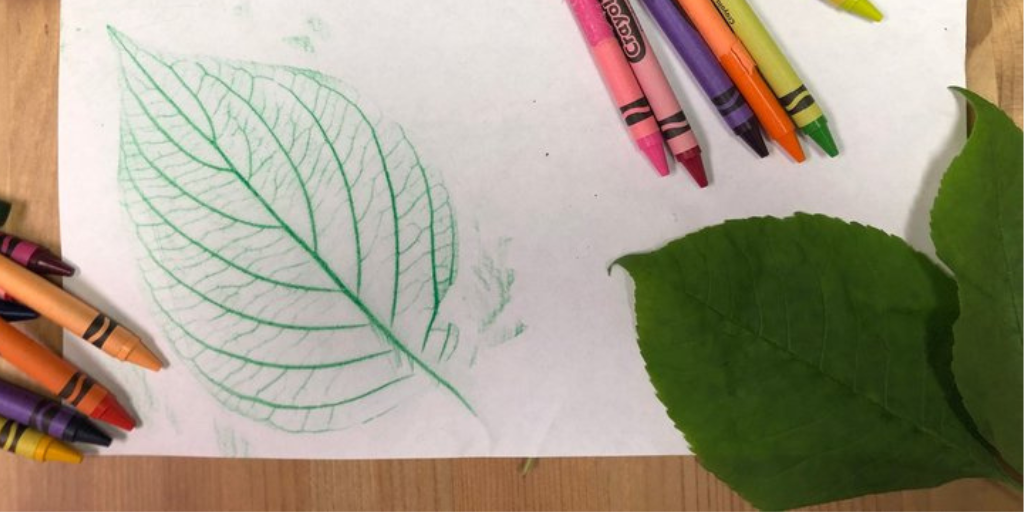
Leaf rubbings offer an opportunity to very accurately capture all the nuances of the leaf. You can just do a leaf rubbing if you are pressed for time but I believe that sketching before rubbing is a valuable activity. Sketching then rubbing helps students see just how many details there are to capture. Have students create a rubbing of both sides of the leaf.
The sketching and rubbing should be done quickly after taking the leaves because the leaf will begin to change as water evaporates from the leaf. Leaf rubbing can be done with pencil or crayon. Rubbing with a colored pencil or crayon allows students to accurately capture the color of the leaf in their rubbing.
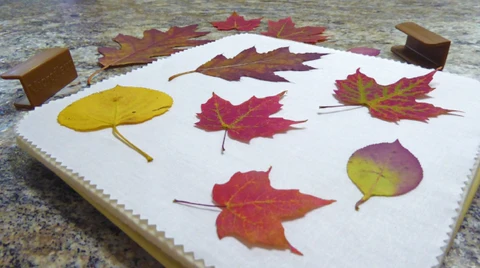
A leaf press
Pressing leaves allows you to preserve the leaves for a long time. If you consider this as a long term project it would be worth it to purchase a class leaf press but if money is a concern you can place leaves in between multiple sheets of newspaper and pile some heavy textbooks on the leaves. This flattens the leaves and removes excess moisture which gets absorbed by the newspaper. This will allow you to preserve the leaves for a long time.
Once you have pressed your leaves for a couple of days, they will be ready for preservation.
Preserving your leaves
The two easiest ways I have found to preserve leaves are to either coat them with diluted white glue or Mod Podge (which looks like white glue)
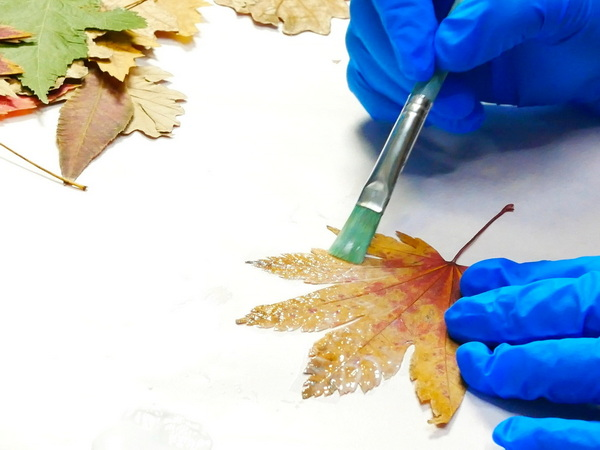
Or to cover the leaf in scotch tape on both sides and then carefully cut around the excess tape.
Once the leaf is completely covered by the scotch tape it is clear and visible. Get two leaves so you can display the front and the back of the leaf. Then you can tape the leaf to your journal or however you are displaying the leaves.
If the preservation of leaves sounds too difficult then the rubbings and sketches work as a perfectly excellent natural history collection as well.
A Natural History Exhibit
If every student collects and preserves leaves and writes their observations you have a tremendously beautiful exhibit. The exhibit should not just be the leaves, they should be accompanied by the students' observations; The species name, where and when the sample was collected and research the student performed to understand the nature of the species.
These pages can cover your classroom and school hallways. You can invite other classes to see your exhibitions. Parents will proudly view the work done by their child.
Everyone who sees your class exhibit will be surprised and amazed by the variety of leaf shapes. There are a tremendous variety of leaf types that we see every single day but don’t pay attention to. When you exhibit them side by side you and your class will be able to marvel at the sheer beauty and variety that is within the immediate vicinity of the school that has been ignored.
Students can take leaf samples from near home but a more valuable collection for your school would be if students collect leaf samples from near the school. This offers an opportunity to collect samples over years and compare leaves over time as the tree matures.
When the exhibits are done you can give the students their work to take home. Many of them will rightly be proud of the work they did. You can also ask students if you might be allowed to keep the best of the collection so that you can build a classroom natural history collection.
This allows you to grow a collection that students can examine over the years. As you develop your classroom collection your ability to display and share the work can refine and improve.
The Long term value of building a leaf collection
Immediately students will develop a stronger understanding of scientific classification and plant evolution and comparative plant anatomy. This understanding will translate into the larger context of understanding natural selection and ecology.
But on a long term basis, beyond your classroom and any standardized tests, these kind of activities will encourage students to pay attention to the world around us. We all suffer from “plant blindness” - for most of us when we look around, we see a proverbial sea of green and that is it. Learning about the plants in our immediate view will give us a greater sense of nuance of the world around us. Students will be able to see maple trees, pine, ash and oak trees and easily distinguish between them. Seeing the world with greater levels of nuance and distinction gives us a greater appreciation of the world around us but also lets us ask more sophisticated questions to further deepen our understanding. Rather than asking about trees in general students will be able to ask specific questions about pine trees and oak trees and their differences.
Important Caveats
Students should be respectful to the plants and not cause undue damage. Whenever possible, recently dropped leaves are preferred. If the plant has only a few large leaves they should not be taken as that can cause tremendous long term damage to the plant. Maple leaves or other leaves are fine to take as the plant has a lot of leaves and evolved to be able to compensate for the loss.
Flower petals should not be plucked from plants as those are metabolically irreplaceable for the plant. Pressing flowers and preserving them is a valuable scientific experience in and of itself and will be a future article but this should not be part of the classroom's collection until you have gotten through the kinks of developing this program.
Preserving leaves is a fun activity for students of all ages but this is not “just” and “arts and crafts” activity. The act of collecting, characterizing and displaying natural artifacts is a cornerstone of science. Students will be engaging in a kind of citizen science over the years as these collections grow.
Many museums gratefully accept well maintained and categorized natural history collections. It is wonderful to go to a museum and see century old collections of well preserved spider webs and other fascinating artifacts. Your classroom can make that kind of long term contribution while having a wonderful learning tool that most people just overlook.
We often think that science classes have to focus on the exotic. There is nothing wrong with learning about far off rain forests, but there is a tremendous amount of valuable scientific observation that can occur with what is overlooked all around us. The mundane can be magical if we teach students to pay close attention to what is nearby.
I'm thrilled to share that my book, Sketching for Science, is progressing incredibly well. Barring unforeseen circumstances I should be publishing in February!
If you liked this essay you might find these essays interesting:
 Selim Tlili
 Selim Tlili

Member discussion: